 Corrugated Boxes & Corrugator
 3 Ply Brown Corrugated Boxes
 5 Ply Designer Corrugated Boxes
 7 Ply Heavy Corrugated Boxes
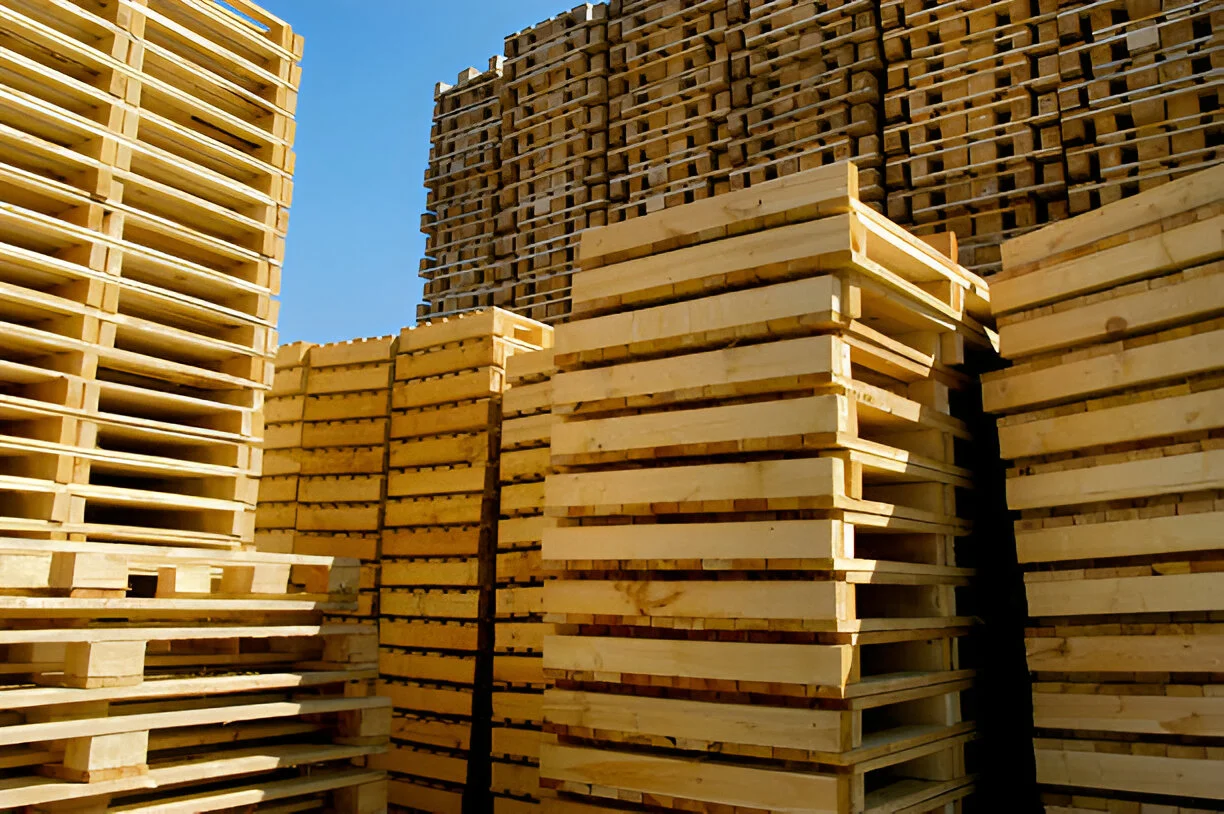 Wooden Pallets Manufacturers
 Angle Edge Protector
 Industrial Tapes
 Packaging Consumables
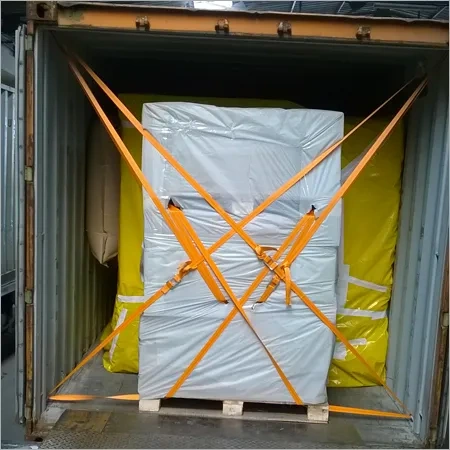 Packaging Services
 Packaging Tapes
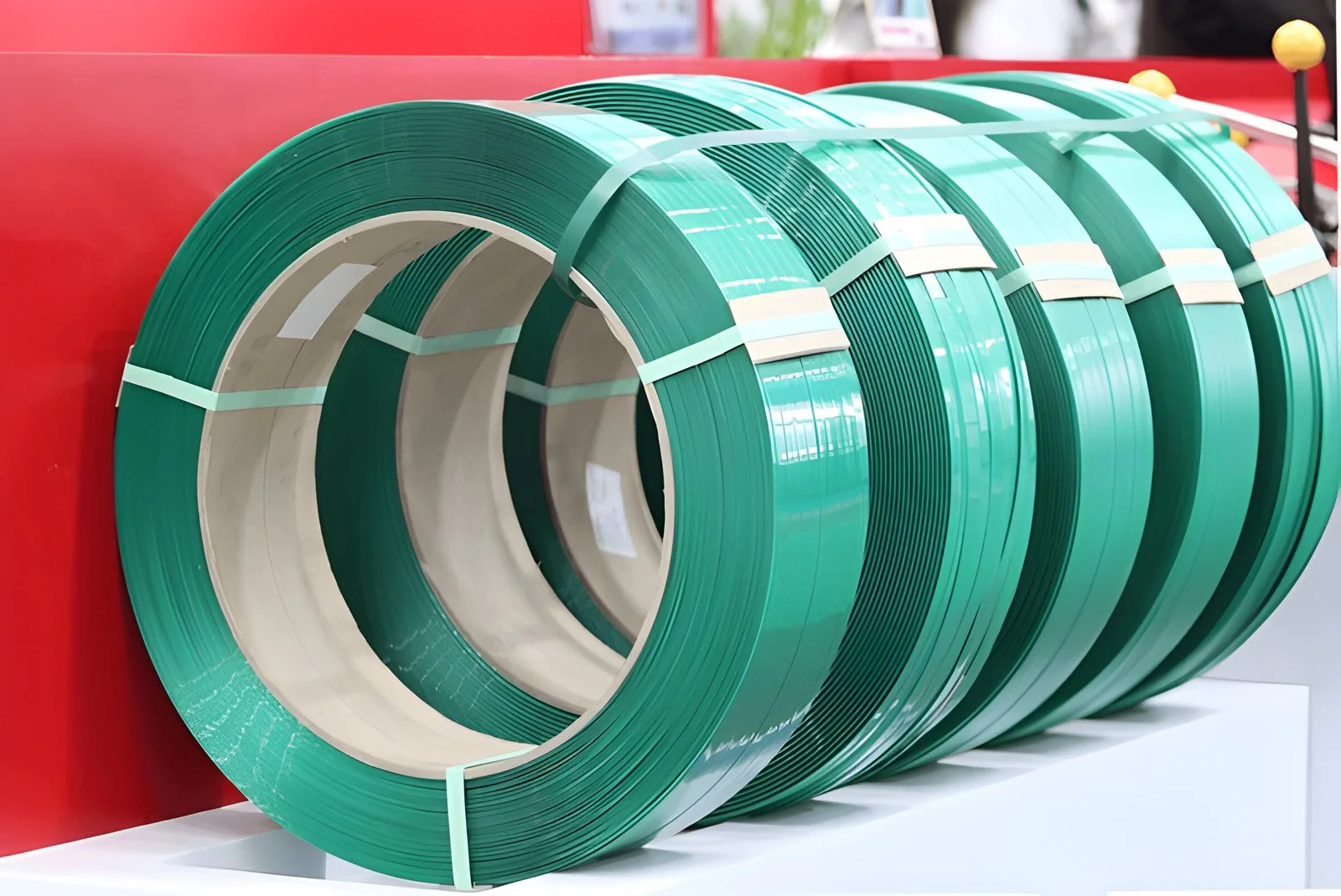 PET Strapping
By Admin | Nov. 09, 2026
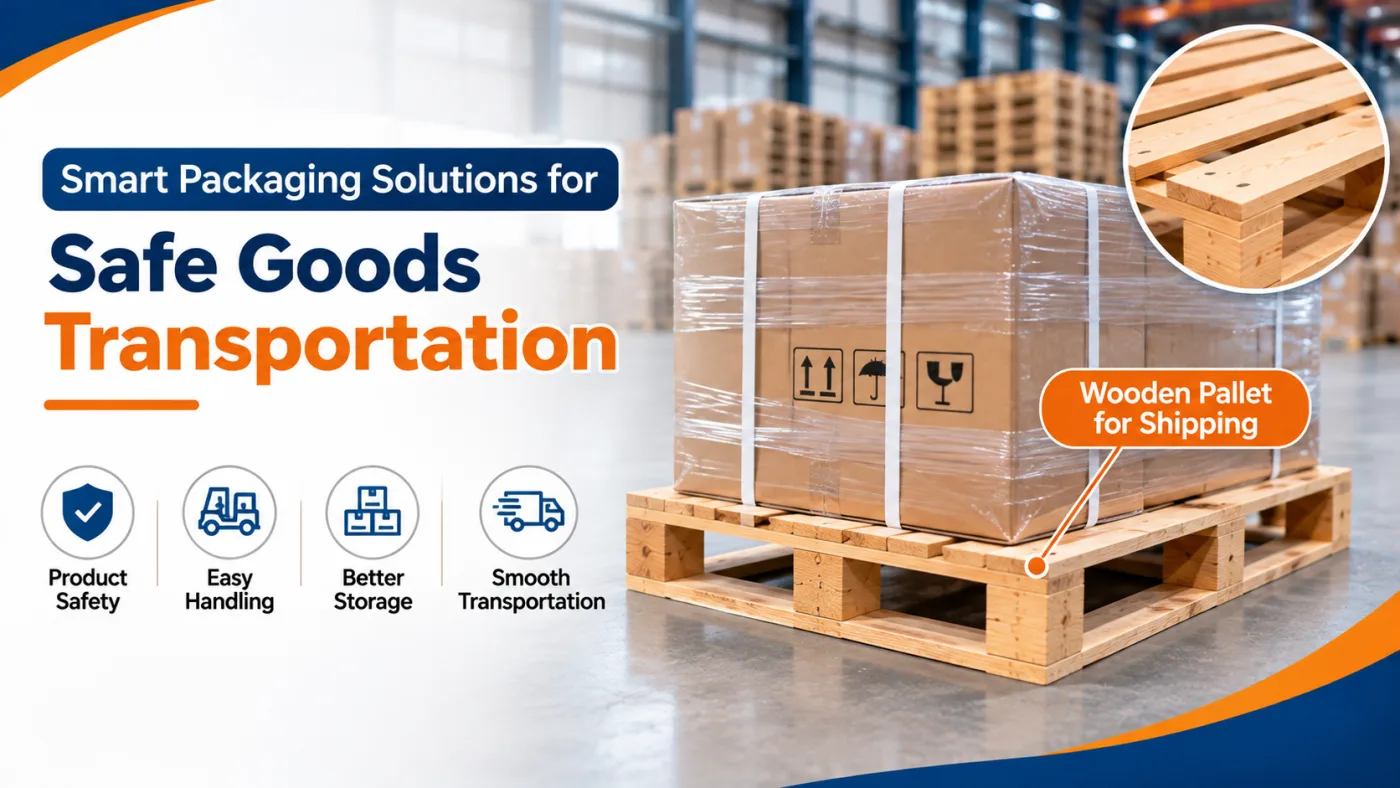
Safe transportation is an important requirement for businesses involved in manufacturing, warehousing, logistics, and product distribution. Goods often travel through multiple locations before reaching their final destination. During this journey, proper packaging and handling help protect products and keep them organized. Choosing suitable packaging materials is therefore an important part of a smooth shipping process.
A Wooden Pallet for Shipping provides a stable base for arranging, storing, and moving packaged goods. It allows businesses to group products together and handle them with equipment such as forklifts and pallet trucks. This makes pallet solutions useful for different commercial and industrial applications.
Industries understand the importance of practical pallet solutions for business requirements. Selecting the right pallet according to product weight, dimensions, and transportation conditions can help businesses maintain an organized shipping process.
A flat structure made of wood that acts as a base on which goods are stacked for storage or shipping. The goods can be stacked on the pallet's surface and lifted as a unit rather than as separate units. This simplifies warehouse and shipping logistics.
If you need to constantly transfer boxes, cartons, machinery parts and packaged products etc. then they can be a big advantage. It's a way to organize the stock and simplify the process of stowing and removing the product.
A Wooden Pallet for Shipping has to be appropriate for the structure, size, loading weight and purpose. The operation should determine what features the product needs to have and consider this when choosing a pallet.
Product handling becomes easier when goods are arranged properly before dispatch. Pallets help businesses prepare products for movement while maintaining an organized arrangement.
Some important advantages include:
Organized product placement: Pallets provide a defined surface for arranging boxes and packaged goods.
Convenient handling: Suitable designs can be moved using forklifts and pallet trucks.
Better warehouse management: Products can be grouped and stored in designated areas.
Simplified loading and unloading: Grouping packages makes handling activities more systematic.
Practical transportation support: Pallets can help businesses prepare goods for different shipping requirements.
Using a Wooden Pallet for Shipping can support a more organized transportation process when the pallet is selected according to the product and load requirements.
Not every pallet is suitable for every type of product. Businesses should review their packaging and transportation needs before selecting a pallet.
Material quality impacts the decision making process of whether a pallet is fit for regular handling. You need to look for cracks in the wood, failing parts, loose pieces and other construction problems.
The pallet has to be capable of carrying the total weight of the products to be loaded on it. The distribution of weight is also critical as an unbalanced load can cause safety issues during handling.
The dimensions of pallets need to be adapted to the size of the goods, as well as to the size of their packages. An appropriate design will allow you to hold the products on the surface of the pallets.
Inspect the entire construction prior to use. Well fastened board and joints will hold the specified weight and handle the needs.
Ensure the pallet design is compatible with your forklifts, pallet trucks, and other material handling equipment.
Proper preparation is just as important as selecting the right pallet. Businesses should follow a systematic process before dispatching goods.
Inspect the products: Check packages for visible damage before arranging them.
Choose the correct pallet: Match its dimensions and capacity with the products.
Distribute weight evenly: Place heavier packages at the bottom and avoid concentrating weight in one area.
Keep packages within the edges: Avoid unnecessary overhang that may affect load stability.
Secure the products: Use suitable wrapping or strapping to keep packages together.
Check the final arrangement: Confirm that the load is stable before moving it.
Inspect before dispatch: Review the complete load and follow workplace safety procedures.
These practices help businesses maintain better control over product handling and transportation.
Wooden Pallets are used in several sectors where products need to be stored, arranged, and transported. Their application depends on the nature of the goods and the required handling process.
|
Industry |
Common Application |
|
Manufacturing |
Moving finished products and industrial components |
|
Warehousing |
Organizing packaged goods in storage areas |
|
Logistics |
Handling shipments during distribution |
|
Retail |
Moving cartons and packaged merchandise |
|
Agriculture |
Transporting suitable packaged agricultural goods |
|
Export businesses |
Preparing products for domestic and international shipping |
A Wooden Pallet for Shipping can be considered for these applications after checking the product weight, dimensions, transportation method, and relevant shipping requirements.
Regular inspection and proper storage help businesses identify pallet problems before reuse. Maintenance is particularly important for companies that use pallets frequently.
Check for broken boards, cracks, loose nails, and damaged joints.
Avoid using visibly damaged pallets for loaded transportation.
Store unused pallets in a suitable, dry, and organized area.
Protect pallets from unnecessary moisture and unsuitable storage conditions.
Follow the recommended load capacity.
Keep damaged pallets separate from those ready for use.
Inspect pallets before each new handling or shipping activity.
These simple practices can help businesses manage their pallet inventory and maintain organized warehouse operations.
Incorrect pallet use can create problems even when the product itself is suitable. Businesses should pay attention to common mistakes during packaging and transportation.
Overloading: Placing more weight than the pallet can support may create handling risks.
Uneven weight distribution: Concentrating products on one side can affect the stability of the load.
Using damaged pallets: Cracks, broken boards, and loose components should be checked before use.
Incorrect package arrangement: Packages extending beyond the pallet edges may be more exposed to damage.
Ignoring handling requirements: Pallets should be compatible with the equipment and transportation method being used.
Avoiding these mistakes helps create a more organized and controlled shipping process.
Choosing the right one for your pallets purchasing needs is an important decision for most businesses that use pallets on a regular basis. Businesses should look at the quality of materials, construction, size, weight capacity and product details before purchasing.
We offer overall pallet solutions suitable for commercial and industrial applications. When a business is telling their needs, the company can give details about the pallet specifications they need, such as weight, size, and how it will be used and moved.
Just how significant is a Wooden Pallet for Shipping to the stockrooms or end customers? It depends on the business's practical needs. SKN Industries endeavors to make sure that the company has access to pallets that can facilitate organized storage as well as the delivery of products.
Moving safely with products requires proper packaging, packing, and handling. Wooden pallets are a convenient platform for transferring goods that have been packed, stored, and prepared to be shifted across manufacturing locations, warehouses, and logistics units. The companies must analyze the material's strength, size, weight, weight capacity, structure, and compatibility with shifting items.
For Shipping a Wooden Pallet for Shipping can facilitate well-organized storage and shipping, especially if it is based on the real dimensions of the items being transported. SKN Industries intended to assist with our pallet solutions for all packaging purposes of business.
A Wooden Pallet for Shipping provides a stable base for storing, arranging, and transporting packaged goods. It makes loading, unloading, and product handling easier and more organized.
Think about product size, stacking and packaging, total load, and transportation space. The pallet should give adequate support with as little hanging overhang as possible.
Examine the material, boards, joints, surface and how it is built. Also ensure that the load-bearing capacity of the product suits your needs.
Wooden pallets are typically used by manufacturing, warehousing, logistics, retail, agriculture and distribution businesses for moving and fitting packaged products.
Spread the load uniformly, load heavier cartons at the bottom, prevent cartons from hanging over the edges of the truck and secure the load with suitable wrapping or strapping.