 Corrugated Boxes & Corrugator
 3 Ply Brown Corrugated Boxes
 5 Ply Designer Corrugated Boxes
 7 Ply Heavy Corrugated Boxes
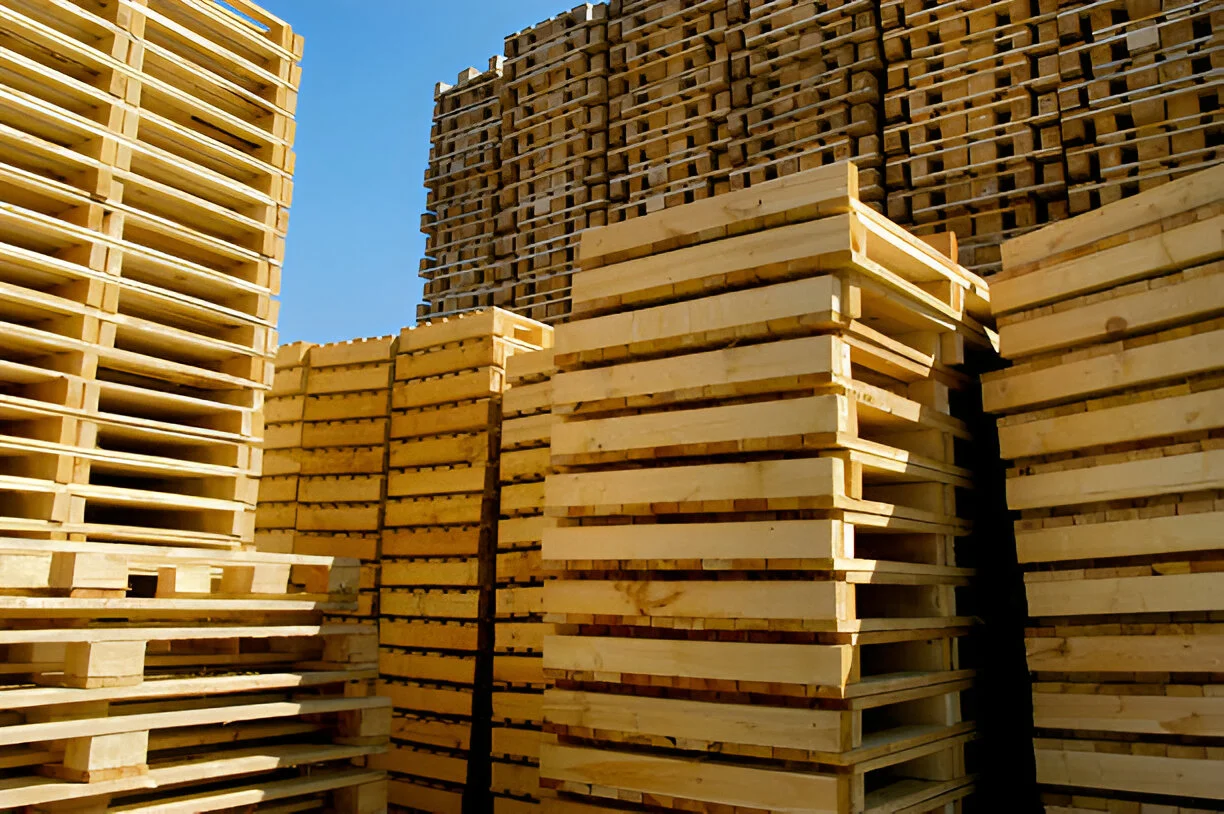 Wooden Pallets Manufacturers
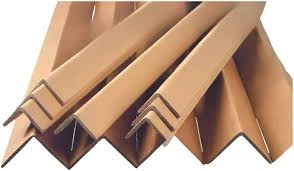 Angle Edge Protector
 Industrial Tapes
 Packaging Consumables
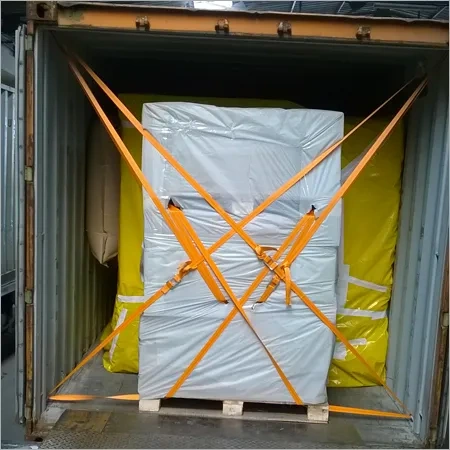 Packaging Services
 Packaging Tapes
 PET Strapping
By Admin | Aug. 24, 2026
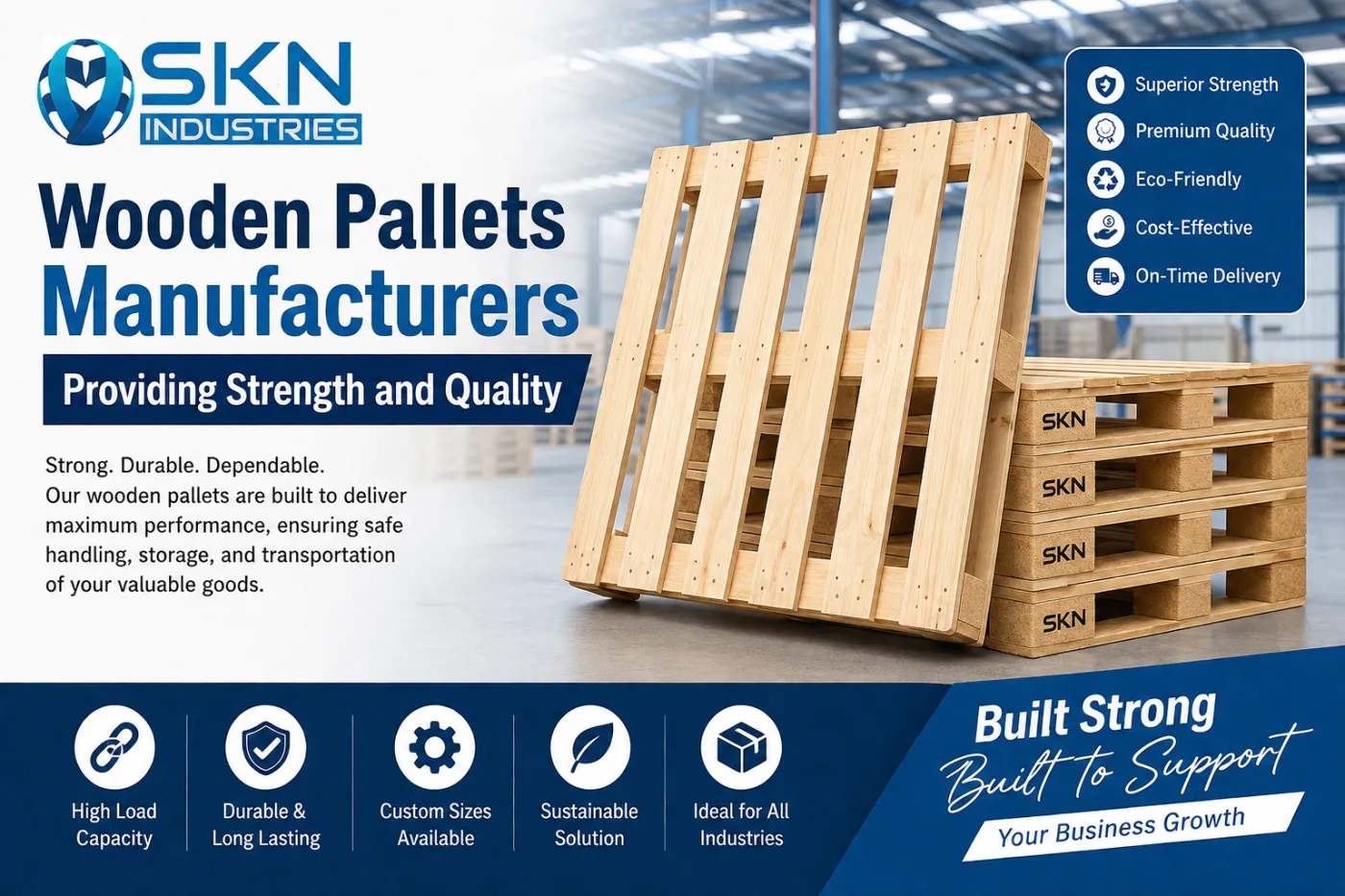
Wooden pallets play an important role in industrial packaging, warehousing and transportation. They provide a stable base for organizing goods, moving materials and preparing products for dispatch. However, pallet performance depends on more than the overall design. The material, dimensions, construction quality and intended application all influence whether a particular pallet is suitable for a business's requirements.
When researching Wooden Pallets Manufacturers, buyers should understand the differences between conventional timber pallets, plywood pallets, pinewood pallets and eucalyptus pallets. Each option has characteristics that may suit particular packaging and logistics needs. Understanding these differences helps businesses evaluate their choices and select pallet specifications based on their products, handling processes and storage conditions.
Consider the following factors before selecting a Wooden Pallets Manufacturers :
Load requirements: Establish the approximate weight of the goods and how the load will be distributed across the pallet.
Pallet dimensions: Choose dimensions that suit your products, warehouse racks, vehicles and shipping arrangements.
Material selection: Compare available wood types and engineered wood options according to the intended application.
Handling equipment: Confirm whether the pallet needs two-way or four-way forklift or pallet-truck entry.
Storage conditions: Consider exposure to moisture, repeated handling and the possibility of rough use.
Customization: Check whether the supplier can accommodate special dimensions, structural designs or other project-specific requirements.
A clear understanding of these factors makes discussions about Wooden Pallets Manufacturers more productive. It also helps businesses compare quotations on the basis of specifications rather than price alone.
Wooden pallets can be manufactured in various designs and materials. But there are different variations of the wooden pallet and each have their own properties as well as what they are best suited for – product and environment.
Basic wooden pallets are regularly seen in warehousing, transportation and manufacturing. Most wooden pallets consist of timber components joined to form a platform, designed to support packaged cargo.
Typical uses for this pallet include the everyday handling and movement of materials, as well as stacking and storage. This will always be significantly affected by the quality of timber, build and design, and the dimensions/weight capacity. Customers should always verify the pallet's design and rating before handling fragile or heavy products or even after purchasing a pallet.
Check quality if pallet is not disposable Loose or broken boards and fasteners can be exposed making the pallet (or product) more difficult to manage and damaging the product.
Plywood pallets are another form of timber pallet. They are manufactured from panels of engineered wood. And could be suitable where a relatively smooth surface and ease of handling are important.
When ordering plywood pallets, companies should take into consideration the panel construction, overall dimensions, load distribution and pallet suitability to the planned shipment. The right specification will depend on the product and the environment in which the pallet will be used.
Potential considerations when comparing plywood pallets include:
Surface consistency for supporting packaged products.
Dimensions adapted to cartons, machinery or assembled loads.
Handling convenience during loading and unloading.
Storage efficiency within the available warehouse space.
Appropriateness for the weight of the shipment, stacking and handling conditions.
These may not be appropriate for all heavy-duty export packaging. Be sure to check the Wooden Pallets Manufacturers specifications and any destination specific packing conditions prior to ordering.
Equipment and manufactured products: Pinewood pallets are made of pine timber and should be considered for various packaging, storing and logistics needs. The right choice of pallet depends on timber grade, size and load.
For companies considering the use of pinewood pallets it is necessary to consider if the packaging is suitable for their process and if the specifications of the pallet are appropriate. The selection also needs to consider storage conditions, reuse and freight type.
A pallet with proper specifications can facilitate the organization of everyday flow of materials. However, the load capacity should be verified for the specific pallet, not assumed from the type of wood species.
Eucalyptus Timber is still another wooden pallet content option. When researching Eucalyptus Pallet Manufacturer , it is vital to take a close check at the material requirements, pallet design and composition, size, as well as the end purpose of the finished pallet.
Eucalyptus pallets can also be used for industrial packaging and handling provided the selected construction provides the appropriate performance characteristics. Any one construction will not suit all applications as the timber properties, manufacturing process and final design all have a role.
Before purchasing, ask the supplier about:
Available pallet sizes and construction options.
Expected load requirements and the basis for those specifications.
Suitability for repeated handling and storage.
Customization options for specific products.
Treatment or documentation requirements for intended shipments.
This approach helps buyers assess eucalyptus pallets on practical requirements rather than relying on material descriptions alone.
The choice between conventional wooden pallets and plywood pallets should be based on the shipment and the operating environment. Neither option is automatically better for every application.
|
Selection Factor |
Conventional Wooden Pallets |
Plywood Pallets |
|
Construction |
Made using assembled timber components |
Uses engineered plywood panels in the design |
|
Surface |
Depends on board arrangement and finishing |
Can offer a relatively uniform panel surface |
|
Common considerations |
Timber grade, board dimensions and structural assembly |
Panel quality, construction and load distribution |
|
Customization |
Depends on the design and manufacturer's capabilities |
Depends on panel design and manufacturer's capabilities |
|
Best selection method |
Evaluate the specific pallet against the intended load |
Evaluate the specific pallet against the intended load |
For heavy machinery, fragile products or loads with unusual dimensions, buyers should request specifications that address the actual load and handling method. The same principle applies when choosing pallets for export shipments or automated warehouse systems.
Wooden pallets support several stages of the supply chain. Their usefulness depends on selecting a design appropriate for the products, equipment and environment.
Pallets enable a neater grouping of prepared items. A few types can help with transportation and handling around your stockroom, if of a fitting size. Pallets must be verified against your shelving, forklift, and forklift truck.
Most factories need pallets for moving raw materials, work-in-progress and finished goods around a production process. Pallet size and weight capacity must be suited to the goods along with the handling frequency.
While in transit, pallets assist in consolidating items to load and unload. Notwithstanding, correct placement of the load and the right type of securing method are still crucial in minimizing movements and safeguarding the load in transit.
Export shipments may need packaging that complies with the customs regulations of the destination market. Import requirements and possible restrictions can vary by material and destination, although there are also regulations and requirements that could affect most shipments. Confirm requirements for any specific shipment rather than assuming every wooden or plywood pallet conforms.
In the case of solid-wood packaging that is subject to ISPM 15, the buyer should clarify the treatment, marking and documentation requirements with the supplier and authorities.
Selecting a Wooden Pallets Manufacturers isn't just based on a photo of their product and requesting the cheapest price. Purchasers should also issue specifications and evaluate whether the supplier can meet the requirements.
1. Share accurate dimensions. Supply the length, width and height required, and any restrictions put in place by a rack, container or handling device.
2. Explain the load. Describe the approximate weight, load distribution and whether the pallet will carry a single item or several packages.
3. Identify the intended use. Specify whether the pallets are intended for one-way shipment, repeated warehouse handling, production use or export packaging.
4. Discuss material options. Inquire about conventional wood, alternative plywood, pine wood or eucalyptus options available where applicable. Make your comparison on the basis of the application of a product rather than the material name.
5. Confirm quality checks. Ask how the supplier checks dimensions, assembly and product consistency. For demanding applications, request relevant specifications or test information.
6. Verify compliance requirements. If pallets will be used for international shipments, confirm applicable destination requirements and obtain any necessary supporting documentation.
7. Review delivery and quantity requirements. Talk through the quantities to order, the lead time and packaging before you commit.
These steps make it easier to compare suppliers fairly and reduce the risk of ordering pallets that do not suit the intended operation.
Choosing the correct pallet Supports ordered storage, handling and more consistent shipping. The most correct way is to choose a pallet build-up and materials for your specific product, load and operating conditions.
The companies that compare wooden pallets manufacturers should consider the specifications, ask questions and clearing questions to accept or refuse the strength of load, treatment, or export. The regular wooden pallets, the plywood pallets, the pallets made of pine wood, and the pallets with eucalyptus must be considered for the use.
Call SKN Industries industrial pallets online customers to request the SKU number and measurements of our various products and we will help you identify the right packaging product for your needs. Find out how many SKNs to order for your application.
A suitable pallet fulfils the entire packaging and logistics chain by assisting you in sorting goods for storage, processing and delivery. By methodically analyzing your product's material, construction, size and load requirements, you will ensure that you can more effectively choose your supplier. When you compare conventional wooden pallets, plywood pallets, pinewood pallets and eucalyptus pallets based on the application, you will arrive at more knowledge-based industrial packaging choices.
Start with the load weight, dimensions, handling equipment, storage conditions and intended use. Compare pallet designs and specifications against these requirements before ordering.
Plywood pallets can suit selected industrial packaging applications. Their suitability depends on construction, load requirements, dimensions and handling conditions, so the specifications should be confirmed before use.
Ask about available dimensions, construction, load requirements, customization, quality checks and any treatment or documentation needed for your intended shipment.
Customization depends on the Wooden Pallets Manufacturers capabilities. Discuss the required dimensions, load distribution, handling method and application before requesting a quotation.
Confirm the destination's packaging regulations and whether treatment, marking or documentation is required for the specific pallet material. Do not assume that all pallet types have identical compliance requirements.